Monday, 15 June 2015

LUX: CONSEQUENCES BOOK REVIEW

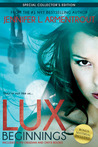
Consequences: Opal & Origin (Lux, #3-4)Consequences: Opal & Origin by Jennifer L. Armentrout

My rating: 5 of 5 stars


I started this series by chance after seeing the books on the shelf at the store. While I was lukewarm about the first two stories because they reminded me of Roswell, I have to say that the next two did not disappoint. I liked them even more than the start of the series. Perhaps because the storyline forked away from what I expected to happen, I was more invested at this point in the characters, or the characters' problems were so much bigger, I couldn't help but connect. But whatever the case, I finished this and started Opposition all in a day.

In the third and fourth books, we get to find out a lot about the aliens heritage, what makes Katy so special, and the oh-so-sweet protective (and sexy and dangerous and vulnerable) side of Daemon. While there is much heartbreak and a lot of rivalry - even between friends - these installments are gripping in the love story they weave, all the while keeping the suspense and mystery of what's going on in the world they are fighting to survive in clear. There were moments when I found myself holding my breath for the characters, and as a reader, there is nothing better than being that sucked into a great story. I'd recommend this to anyone.


View all my reviews

LUX: BEGINNINGS BOOK REVIEW

Beginnings: Obsidian & Onyx (Lux, #1-2)Beginnings: Obsidian & Onyx by Jennifer L. Armentrout

My rating: 4 of 5 stars


I purchased this whole series after humming and hawing during many trips to Chapters. Aliens aren't usually my thing, and I see a lot of reviews stating that this reminds them of Twilight, but it took me a while to dig in because it reminded me (in my opinion) of that TV series, Roswell - not that that is a bad thing. I used to be addicted to that show :)

The characters are well-rounded and likeable, and even the antagonist, Ashley, is endearing because she is the perfect little you-know-what. The love story was a bit predictable; however, I really liked the twists and turns that the author created in this world. The setting the author created was great. I especially like the fact that everyone seems to "know" that the aliens are somehow different, but they don't know how. In my opinion, I would imagine more than Dawson's girlfriend would have guessed or caught them being different, but that is the only nit-pick I had. Otherwise, by the end of the second story, I had to go buy the next installment right away. I would definitely recommend this book - and the series as a whole - to fellow readers.


View all my reviews

Monday, 16 March 2015

Writing for YA Audience

Writing for YA is a lot different than writing for children. I repeat, IT IS A LOT DIFFERENT! What a writer portrays for a twelve-year-old is not what they should portray for a sixteen or seventeen-year-old. Technically, anyone under eighteen is a child. Yes, okay. I agree. But they go through so many different stages. When I was fifteen-years-old, I moved out. When I was twelve . . . the idea of living on my own was foreign. Three years makes a big difference. So while this might not apply to all pre-teens vs. teens, when I write stories for the YA audience, I have to try to remember how I thought and felt when "I" was a young adult, and then try to look at the world today and apply it.

1. TEENAGERS ARE NOT CHILDREN! Why don't people realize this when writing/critiquing a story? Yes, I get why you avoid 'triggering' your audience. If you talk about death or suicide, you don't want to allow it to be okay. What if a young reader gets ahold of your work and then decides, "Oh, well, it was okay for this character . . . " If they went on to commit suicide because of that, how would the author feel? No, you definitely don't want to wade into that pool - life is too precious, especially when they haven't even lived yet. But, you also don't want to dumb down the story, either. Teenagers will put the book down if they feel like subjects are being brushed over because they can't 'understand' them. It's the equivalent to a parent using a condescending tone and saying they'll understand when they are older. So, I guess my rant on this can be summed up nicely into the following: don't brush over topics in YA/New Adult, but do not 'trigger'. If you are going to discuss suicide, bullying, promiscuity, etc., make sure that you let it be known these are not okay, and should not be construed as the 'norm'. I love a gritty book as much as the next girl (a true story is powerful), but I remember what it's like to be a teenager, and adult problems don't wait until adulthood to arrive. Just be careful in your message. Words have a powerful influence.

2. WORD CHOICE. First, text talking is for losers. Plain and simple, it's hard to read and annoying, and nobody - not even the teenagers who love to use it - will read a story full of text talk. Should you say 'okay' instead of 'acceptable'? Yes. But they do think/talk in coherent sentences that aren't broken up with 'uh...like so and so...' and 'like, totally'. Use a few more 'likes' in dialogue, but whatever slang you think they use, don't overdo it. (Like, I totally don't, like, reading like this.) Also, there is always a difference in dialogue vs. internal monologue i.e. 'thinking'.

3. SEX. Teenagers have sex. Period. But when we write about it, remember it's not Harlequin Romance. A little petting, some cuddles, and sweet talk - that's all they need. Make it real by including the feelings instead of actions. It has been done beautifully and can be done so again... and again... New Adult novels tend to be a bit more detailed, and they should be, as most people 'experiment' in college and their 20's, but still, keep it as 'less is more'. It's classier!

4. PARENTS/GUARDIANS. These guys usually aren't so present in the character's life. At least not so much as the character should be making the decisions/realizations of their conflict on their own. While it isn't right to undermine the parental figure, it is also necessary to promote YA characters as self-sufficient as possible. They don't have to break rules or curfews or the law to do this, either. If writing for the New Adult audience, sure, there aren't parents in college - high school is different.

5. LENGTH. While the novel length should be up to 80k (normal YA) or around 100k (Fantasy/YA), you can and should keep both paragraph and chapter length minimal. This gears readers for a fast-paced ride and easily enables them to just read one more chapter (we all say that). Really, though, young readers have busy lives. They need to have stop/start points, and they need to have them often. They also (sometimes) have shorter attention spans because of their oh-so-busy lives.  The trend is longer in Fantasy, though, so use your discretion...

Hopefully this helped someone shed some light on some of the distinct aspects of writing YA fiction. Follow the links and you will find a wealth of information within each header. If you disagree on whether these are some of the top five points for YOU, please leave a comment and tell me why :)

Cheers!

Sasha Leigh

Thursday, 19 February 2015

8 Ways to Grab Your Readers Heart with Emotional Scenes

One of the main immersive qualities that keeps readers turning pages is the author's ability to produce a unique voice, a pace that fluctuates while still remaining fluid enough so as not to jar the reader out of story, and its believability. By no means is this ALL there is - you can have a great story with mediocre characters that lack depth, or great characters and no story. For now, I aim to confront the believability, or at least one aspect of this concept: emotions.


If you ever listen to someone while they are upset, sad, or afraid, their voice changes. People who throw five six-syllable words together for a ten-word sentence suddenly speak as though they haven't graduated to a two-syllable vocabulary, some stutter, raise their voice, or even speak so fast that nobody can figure out what it is they are saying. It all depends on the situation and the person. But it isn't often that there will be forty-word sentences in an emotional scene, or purple prose spouting the beauty of a scene as though describing every petal of a rose.

Think of the Stages of Grief (I think of the 5-Stage model) when you are writing an emotional scene: denial, bargaining, depression, anger and acceptance. If you are aware of these, you can more closely predict how a character will respond so that it is believable (not just what you want them to do). Here are a few excercises to attempt if you are having trouble getting those emotions out:

1. Draw from your own memories. Write down situations you have been in using brainstorming, snowflake method, or even just making little pieces of paper which you later pick from a hat. One at a time, pick a situation and write about it. You can:

  • Freewrite -Write everything you know, from start to finish of the memory, without pause or edits;
  • Jot Notes - Make a bulleted list of the emotions the situations you have been in made you feel;
  • Again, brainstorm with words about those emotions; and
  • Use the Stages of Grief as an outline and identify what you felt during each stage throughout an emotional memory. This does not need to be restricted to death, but can outline the end of a relationship, a drastic life change, a relocation, and much more.
2. Watch TV. Discover which situations will provoke more emotion, what age group overreacts more than another (usually teenagers), and how they get over what they have been thrust into by the writers.

3. As a writer, this is one of your most important resources, but I put it as the third tool because the old, "Write what you know" cliche does have its place, and is important when you are attempting to write a scene powerful enough that your reader can't pull their nose out of it. Also, you can write while watching TV, so there's that.But we all have our favorite scenes in our favorite novels that we can't help but go back to, so do it again. Read it over and over until you can say with certainty what it is about the passage that has gotten you so hooked, and then try to incorporate the qualities that you admire (without copying). 

4. Now that you know the level of reaction, and which situations will be more likely to provoke a more intense outcome, figure out the dialogue. Do they moan and cry? Slur? Stutter? Or is the character(s) so traumatized, they shut down? A really great example of this, especially for YA, is The Vampire Diaries. Though it's not my favorite show, it does have some of the most believable dialogue once compared to the reactions/dialogue of teens.

5. Set a mood and stick to it. I've read some scenes where the emotion is on full-throttle, but the effect was broken by bouts of humor in between the protagonist declaring it's the end of the world and wishing they could be at the mall instead (needles to say, I didn't finish that book). Dry humor is sometimes okay within emotional scenes, if it fits with the character's voice, but don't overdo it or you'll lose the effect.

6. Remember your audience. If you are writing for children, you're going to fluff it up i.e. "Oh, Tommy was so sad . . ." But if you are writing for MG/YA/NA, your content can become more graphic with each age category. MG might get hit in the nose from a bully, and then go tell a teacher. YA might use a few swears in the same situation, plus a return swing, while NA could turn into a full-fledged bar brawl that, because they are now "in the real world", ends with having a sleepover with the police. Now escalate to an adult novel (Rated-R for violence, mature language and/or subject matter, or nudity), and you'll have to read the book between the cracks of your fingers as you cover your eyes and blush.

7. Surprise your reader (or character) and write what would be least expected to happened in a given situation. Abnormal situations with high emotion will provoke people to do things that they would not do otherwise. Use this as a tool to make your story more interesting.

8. As I mentioned above, most speech and action is stilted and short in an emotional scene; however, too much of this will drop your reader's interest, so mix it up every few paragraphs with a thought or two from the character. A gesture, short description, revelations, or a really good, incoherent ramble, could be used, as well, if implemented in SHORT DOSES.

As always, this list is not exhaustive for this topic. It is based on my own experiences as a writer, as well as what I have read from authors I admire. All writing takes practice, so work on it, and sooner or later you will find what works for you. However, if you're are ever stuck, try one of the above. Before committing an emotional scene for publication, make yourself aware of the "triggers" people may encounter upon certain subjects. While much of this is over-done, there are subjects that can trigger episodes, and for your readers' sake - and your reputation - make sure to put a warning on your written works, which can easily be worked into the blurb or copyright page.

Do you know of any other ways to provoke emotions in your writing? Acting out a scene with a friend? Improvization? Obviously, I write, so those aren't big on my list, but it would be interesting if they worked.

Cheers!

Sasha Leigh

Monday, 22 September 2014

Pre-Order Fiasco

I recently published my debut novel, Fate's Exchange (Twisted Fate, #1), via Amazon's KDP Select. Initially, I was leery about their exclusivity clause, but after the free promotion, was happy with the sales. So I decided that since I would be publishing Fate's Return (Twisted Fate, #2), on October 27, 2014, I would release the novella, Pulled Away (Twisted Fate, #1.5), between the two novels to gain interest and maintain momentum.
Pulled Away Available for Purchase

Monday, 15 September 2014

The Write Time: 5 Ways to Find out What Works Best for You


One of the biggest things I see being discussed is setting a daily word count. What does this mean? You set yourself a minimum word count (never a maximum) to meet each day - even weekends and vacation - and that's what you strive to meet. I read an interesting post recently where a man actually rewarded himself for each day that he met his minimum word count by putting a toonie into a jar and saving it. After a few months, you've got a couple hundred dollars, and you spend it on something fun. I repeat, fun. Once more - do not pay a single bill with this money. It is your reward.

So when do you write? Do you know the time that best suites your needs? How? Do you know which way is your road to being as productive as possible? Or do you do it wherever you can, whenever you can? I'm a little bit of both. Working full-time and being a single mother . . . well, if I wasn't prepared to snap up a moment of quiet, I'd have never written a word, never mind a novel and these posts. I would be a pain to be around - I seriously get grumpy when characters start yelling at me to stop ignoring them. So whether you are a busy parent, having to work to pay the bills, or so free you can stare at clouds all day, this is my top five tips for where writing can be successful.

Friday, 12 September 2014

5 Ways to Use Book Reviews

In my previous post, 5 Ways to Get Book Reviews, I explained what reviews were and why, as an author, you want more. But knowing where to get reviews is just the beginning.

You've worked hard on writing the best novel that you are capable of creating, and even harder editing and creating the cover, formatting, and repeating the process over and over again until it's perfect. So for the purposes of this post, let's assume that your book is A.M.A.Z.I.N.G., void of typos and unattractive grammar and punctuation errors. If not, go back to the book. You don't want to publish anything half-heartedly and receive negative reviews that will reflect poorly on your future endeavors, forcing you to choose a pen name when you finally decide to become serious.


Vicious Princess

 ⭐⭐⭐⭐⭐ If you love Divergent, Vampire Academy, and all things fae, you will love this! I was taken by surprise by this book and read it in o...